
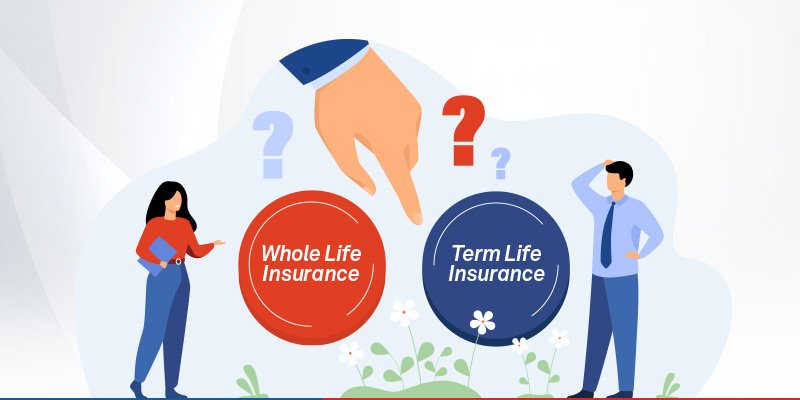
If you live in Florida and are thinking about life insurance, one of the first decisions you’ll face is whether to choose a “term” policy or a “whole life” (permanent) policy. These two options serve different needs. Understanding how each works — and what fits your life and family situation — helps you make a wise choice.
What is Term Life Insurance?
- Temporary coverage: Term life insurance provides protection for a fixed period (the “term”), for example 10, 20, or 30 years. If you die during that term, the policy pays a death benefit to your beneficiaries. If you outlive the term, the coverage ends and no benefit is paid.
- Lower cost: Because it’s temporary and doesn’t include extra features, term insurance is generally much cheaper than whole life.
- Straightforward structure: You pay the premium, and if you pass away during the term, your beneficiaries get the death benefit. There’s no cash value or investment component.
- Flexible for specific needs: Term life is often used to cover a period of financial vulnerability — for example, years in which you’re raising children, paying off a mortgage, or have other debts.
What is Whole Life Insurance?
- Lifetime coverage: A whole life policy (also known as permanent life insurance) remains in effect for your entire life, as long as premiums are paid. Your beneficiaries will receive the death benefit regardless of when you pass.
- Cash value accumulation: Part of what you pay in premiums goes into a cash-value account. This value grows over time, often at a guaranteed rate, and remains tax-deferred. You may be able to borrow against it, withdraw it, or use it later — although that can reduce the death benefit.
- Fixed premiums and predictable payout: Premiums often remain level for the life of the policy, and the death benefit is guaranteed (subject to not missing payments).
- Potential long-term financial benefits: Because of the cash value component, whole life insurance can serve, to some extent, as a savings or legacy tool — helpful if you intend to leave money for heirs, cover final expenses, or provide for lifelong dependents.
Pros and Cons: Term vs. Whole Life — What to Keep in Mind
Advantages of Term Life
- More affordable — often significantly cheaper than whole life for the same death benefit.
- Easy to understand and manage: no cash value component, no complicated features.
- Flexibility: good for “temporary” needs (e.g. until kids are grown, until debts are paid, during highest earning years).
- Potential to invest the difference: Because premiums are lower, many people choose to invest the savings elsewhere (e.g. retirement accounts, stocks).
Cons of Term Life
- Coverage ends when the term ends. If you outlive the policy, no payout occurs.
- If you still need coverage later, you may have to requalify — which could be harder if your health has changed.
- No cash value or savings component. The money you pay simply buys death benefit coverage.
Advantages of Whole Life Insurance
- Lifetime protection — beneficiaries receive benefits no matter when you pass, as long as premiums are paid.
- Cash value growth — some portion of your premium builds savings that accumulate over time in a tax-deferred way. This can be useful as a financial asset.
- Fixed premiums and death benefits — predictable costs and outcome.
- Estate planning and long-term dependents — If you have lifelong dependents (like a disabled child), or you want to leave a guaranteed legacy or cover final expenses, whole life can be a good fit.
Cons of Whole Life Insurance
- Higher premiums — often much more expensive than term life for the same benefit.
- Cash value grows slowly — it may take many years before the accumulated value is significant.
- Less flexibility — some whole life policies may limit adjustments to premiums or benefits, and borrowing from cash value reduces death benefit.
What About Florida — Does Location Change What’s “Better”?
Living in Florida doesn’t fundamentally change how term or whole life insurance works. Insurance regulations for life insurance are largely federal or nationwide. What does matter, however, are personal circumstances and financial goals.
Here are some Florida‑relevant considerations:
- If you’re relatively young, healthy, and have dependents (kids, mortgage, etc.), term life often makes sense because it provides affordable coverage during the years when financial obligations are highest.
- If you expect to live a long life, want to leave money to heirs, or have lifelong dependents — whole life may provide peace of mind, knowing your beneficiaries are covered no matter when you die.
- Premium costs in Florida will depend on your age, health, lifestyle, and the amount of coverage you select — similar to other states.
- If you plan to stay many years in Florida and want a long-term safety net, a permanent policy like whole life could be more appealing. If instead you just want “protection during a phase” (raising kids, paying off debts), term may be more efficient.
Which Should You Choose: Term or Whole Life? (Scenarios & When Each Makes Sense)
Here’s a breakdown of common life situations and which type of insurance tends to make more sense:
| Situation / Goal | Best Option & Why |
|---|---|
| You are young, have children, mortgage, debts, limited budget | Term life — affordable, covers you during peak liability years. |
| You have a spouse and dependents relying on your income now, but expect debts to be paid off in 15–30 years | Term life — matches coverage to need period. |
| You want lifelong protection for your family or dependents (e.g. disabled child) | Whole life — guaranteed death benefit no matter when you die. |
| You want a policy that builds savings/cash value over time | Whole life — policy builds a cash value component. |
| You want coverage but prefer to invest savings yourself (retirement, stocks, funds) | Term life + investing difference — lower premiums free up funds for other investments. |
| You want predictability (fixed premium, guaranteed benefit, long-term planning) | Whole life — stable premiums and guaranteed benefit. |
Common Misconceptions and Pitfalls
- “Whole life insurance is just a savings/investment account.” While it does build cash value over time, the growth rate is usually modest compared to more aggressive investments. It’s primarily an insurance policy, not a full replacement for retirement savings.
- “Term insurance may outlast me.” With term, if you outlive the policy, it ends — so timing matters. You might need to renew at higher rates or requalify.
- “I can always convert term to whole life later.” Some term policies offer conversion options. But not all do — and there may be a conversion window. If you wait too long or your health changes, conversion might not be possible or affordable.
- “Higher premiums equal better policy.” More expensive doesn’t always mean better for your needs. If the cost strains your budget, whole life might become unsustainable.
How to Decide: A Simple Process to Choose What Works for You
- List your financial responsibilities (mortgage, children, debts, dependents, final expenses).
- Estimate how long those responsibilities remain (years until kids independent, mortgage paid off, retirement, etc.).
- Check your budget. How much can you reliably afford to pay monthly or annually for premiums?
- Consider long-term goals — do you want to build capital, provide lifelong protection, or leave a legacy?
- Compare quotes from licensed insurers (especially in Florida) for both term and whole life.
- Factor in flexibility — what happens if your income changes, you develop health issues, or your coverage needs change.
- If unsure, consult a licensed financial adviser or insurance agent — they can project costs, benefits, and help you pick a policy aligned with your situation.
My Recommendation — What Generally Makes More Sense for Most People in Florida
For many individuals and families — especially younger people with dependents, debt, or temporary financial responsibilities — term life insurance tends to be the better choice. It offers robust coverage for a fraction of the cost of a whole life policy. The money you save on premiums could be invested elsewhere (retirement accounts, savings, investments) to build wealth over time.
If, on the other hand, your priorities include lifelong coverage, leaving a financial legacy, covering permanent dependents, or adding a cash-value component to your financial plan — whole life insurance may offer value, despite higher costs.
Ultimately, there’s no one-size-fits-all answer. The “best” option depends on your personal situation, budget, responsibilities, and long-term financial goals.
Frequently Asked Questions (FAQ)
1. What’s the difference between term life and whole life insurance?
- Term life insurance provides coverage for a specific period (e.g. 10, 20, or 30 years). If you die during that term, your beneficiaries receive a death benefit. If you outlive the term, the coverage ends and no benefit is paid.
- Whole life insurance (a type of permanent life insurance) provides coverage for your entire life, as long as you keep paying premiums. Upon death, a death benefit is paid to your beneficiaries no matter when you die.
2. How do premiums compare — is one more expensive than the other?
- Term life generally has much lower premiums than whole life, especially when you are younger and healthy.
- Whole life premiums are typically higher because the policy also builds cash value and offers lifelong coverage.
3. Does whole life insurance build savings or cash value?
Yes. Whole life policies often include a cash-value component: part of your premium goes into a cash-value account (besides paying for insurance). Over time, this value grows (tax‑deferred), and you may be able to borrow against it or access some of it during your lifetime.
Term life insurance does not build cash value — it only provides a death benefit if you die during the term.
4. If I only need coverage for a certain period (e.g. until kids are grown or mortgage paid), does term life make sense?
Yes — term life is often the most practical choice for those who need coverage during limited periods of financial responsibility (children’s upbringing, debt repayment, etc.). Because it’s more affordable, you can get adequate coverage for a modest premium.
5. What are the advantages of whole life — why do some people choose it?
Whole life may be appealing if you want lifetime protection, especially if you have long-term dependents, want to guarantee a death benefit, or like the idea of accumulating cash value over time. Premiums stay fixed, and the insurer will pay out the benefit whenever you die (as long as premiums are paid).
It can also be useful for estate planning or as a financial asset.
6. Are there drawbacks to whole life insurance?
Yes. The main drawback is cost — whole life premiums are considerably higher than term life for the same death benefit amount.
Also, while cash value builds up, the growth tends to be slower than many other forms of investments (stocks, retirement funds, etc.).
And if you borrow against or withdraw cash value, it could reduce the death benefit.
7. Is there flexibility in these policies — can I convert a term policy to whole life later?
Yes — some term life policies offer a conversion option, allowing you to convert to a permanent policy (like whole life) without a new medical exam. That can provide flexibility if your needs change.
However, not all term policies support conversion, and converting later may be more expensive depending on age and health.
8. Does living in Florida change these general differences between term and whole life?
Not fundamentally. The core features — coverage duration, cost, cash value — remain the same in Florida as elsewhere.
But local insurers’ pricing, your age, health, and personal financial situation will determine actual cost and suitability. It’s wise to get quotes from Florida‑licensed insurers when comparing options.
9. Who typically benefits most from term life vs. who benefits most from whole life?
- Term life tends to suit younger people or those with temporary financial obligations (mortgage, children, debts). It gives affordable protection when it’s needed most.
- Whole life fits people who want lifelong coverage, are thinking of leaving a legacy, have long-term dependents, or value the savings/cash‑value feature.
10. How can I decide which is right for me?
Consider:
- What are your financial obligations and how long will they last (children, mortgage, debts)?
- What’s your budget — can you afford long-term, higher premiums?
- Do you want long-term protection or just temporary coverage until certain obligations end?
- Are you interested in cash value accumulation or do you prefer to invest savings elsewhere?
- Do you expect to need coverage later in life when term expires — if so, will converting or buying new coverage be feasible?
Read More:
- Does Travelers Insurance Cover Rental Cars in the U.S.? 2025-26
- Finding the Best Recreational Vehicle Insurance Company in the United States
- Is Commercial Auto Insurance Cheaper Than Personal in Pennsylvania? 2025
- Top 10 Commercial Property Insurance Companies in the United States
- How much is Liability Insurance for a Small Business in United Status