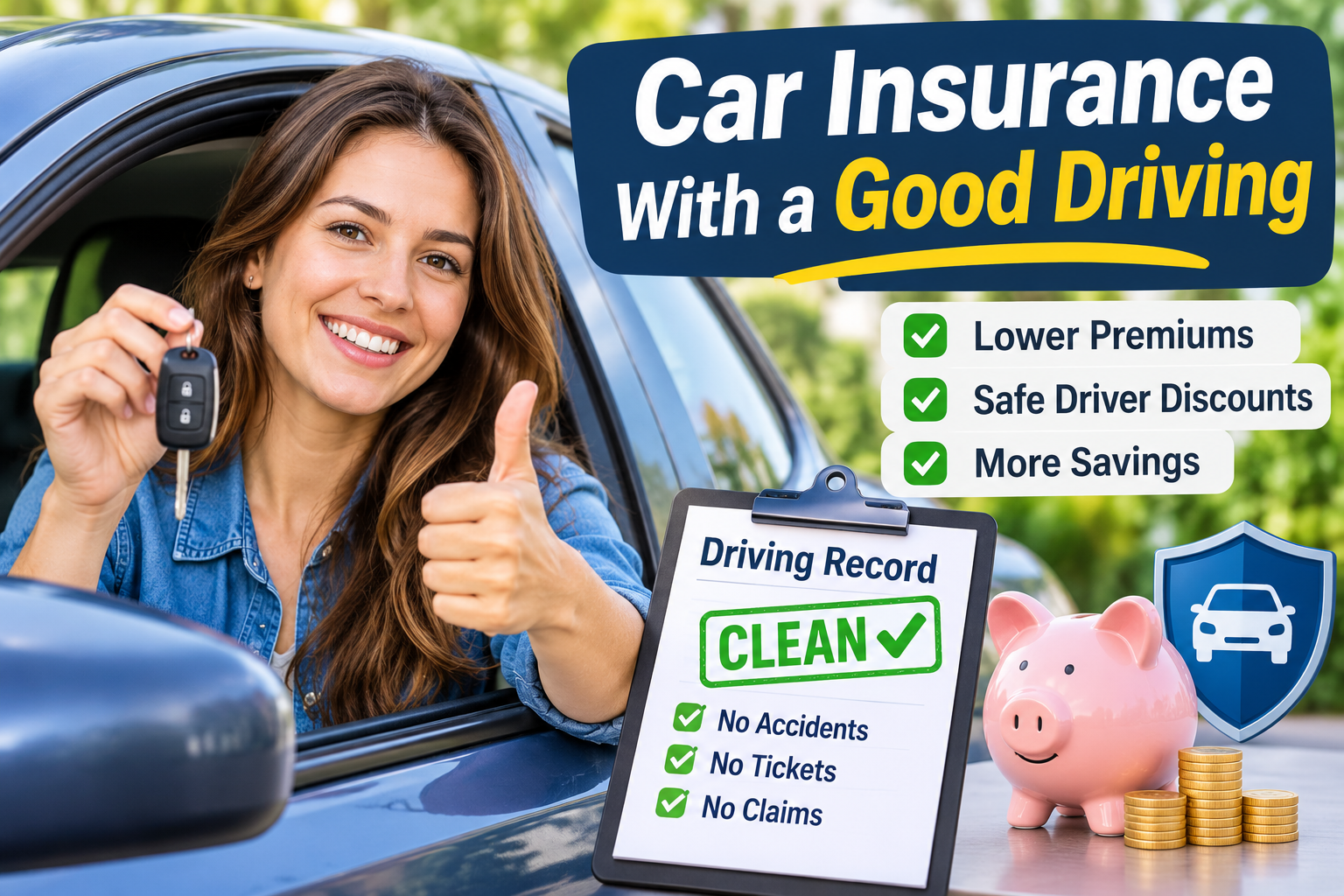
Finding affordable car insurance is easier when you have a good driving record. Drivers who avoid accidents, speeding tickets, reckless driving violations, and insurance claims may qualify for lower premiums and special discounts from insurance companies.
However, having a clean driving history does not automatically guarantee the cheapest insurance rate. Your age, location, vehicle type, credit-based insurance score where permitted, coverage limits, deductible, and insurance history can also affect how much you pay.
Whether you are purchasing car insurance for the first time or looking to switch providers, understanding how insurers reward safe drivers can help you save money without sacrificing important protection.
In this guide, we explain how to get cheap car insurance with a good driving record, which discounts to look for, how to compare insurance companies, and what coverage options can help reduce your premiums. Affordable Car Insurance Plans
1. Why a Good Driving Record Helps You Get Cheap Car Insurance
A good driving record is one of the important factors insurance companies consider when calculating premiums.
Drivers with clean records generally represent a lower expected claims risk than drivers with repeated accidents or serious traffic violations. As a result, many insurers offer lower rates or safe-driver discounts to eligible policyholders.
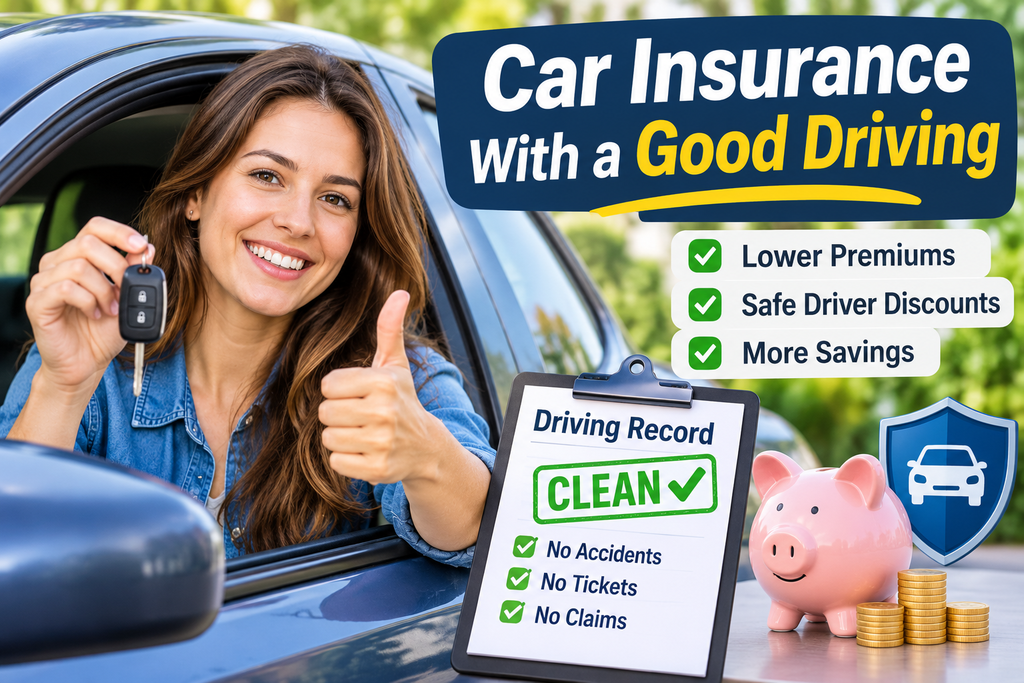
A good driving record typically includes:
- No recent at-fault accidents.
- No speeding tickets or major traffic violations.
- No reckless driving convictions.
- No DUI or DWI convictions.
- Few or no insurance claims.
- Consistent insurance coverage without significant lapses.
Insurance companies have different definitions of a clean driving record. Some examine the previous three years, while others may consider five years or longer, depending on the violation and state regulations.
Benefits of Having a Clean Driving Record
Maintaining a clean driving history can provide several advantages:
Lower insurance premiums: Insurers may offer more competitive rates to drivers with fewer violations and claims.
Safe-driver discounts: Some companies provide discounts for maintaining an accident-free or violation-free record.
More insurance options: A clean driving history may make it easier to qualify for standard insurance products.
Better renewal opportunities: You may have more opportunities to compare competitive rates when your policy renews.
Potential long-term savings: Maintaining safe driving habits over several years can help you avoid accident surcharges and qualify for additional savings.
2. Compare Quotes From Multiple Car Insurance Companies
One of the easiest ways to find cheap car insurance is to compare quotes from several insurance providers.
Even when two drivers have similar driving histories, their premiums can differ significantly between companies. Each insurer uses its own pricing models, underwriting guidelines, and discount programs.
Avoid accepting the first quote you receive. Instead, compare at least three to five insurance companies.
Popular Car Insurance Companies to Compare in the United States
Some well-known providers worth researching include:
- GEICO.
- State Farm.
- Progressive.
- Allstate.
- USAA.
- Nationwide.
- Farmers Insurance.
These companies offer different coverage options, discounts, and eligibility requirements. Their prices vary by driver and location, so there is no single provider that is cheapest for everyone.
What to Compare When Getting Quotes
| Comparison Factor | What to Check |
|---|---|
| Monthly premium | How much you pay each month |
| Liability coverage | Bodily injury and property damage limits |
| Collision coverage | Protection for covered vehicle collision damage |
| Comprehensive coverage | Protection against covered non-collision losses |
| Deductible | Your out-of-pocket amount for covered claims |
| Discounts | Available safe-driver and policy discounts |
| Customer service | Claims support and communication |
| Financial strength | Ability to meet insurance obligations |
The key is to compare policies with similar coverage limits and deductibles. A cheaper quote may provide less protection than another policy.
3. Ask About Good Driver and Safe Driving Discounts
A clean driving record may qualify you for special insurance discounts. However, not every company uses the same discount names or eligibility requirements.
Some common discounts include:
Good Driver Discount
Insurance companies may reward drivers who maintain an accident-free and violation-free driving history for a specified period.
Depending on the insurer and state, you may receive a lower premium for demonstrating responsible driving habits. Affordable Car Insurance Plans
Accident-Free Discount
If you have not caused an accident for several years, you may qualify for an accident-free discount.
Some insurers also offer accident forgiveness programs, which may prevent your first qualifying accident from increasing your premium. Eligibility and conditions vary.
Defensive Driving Course Discount
Completing an approved defensive driving course may help you qualify for a discount.
These courses teach drivers how to recognize road hazards, maintain safe distances, avoid distractions, and respond to dangerous driving situations.
Check with your insurance company before enrolling to confirm that the course qualifies.
Low-Mileage Discount
If you work remotely, drive occasionally, or use public transportation, you may qualify for a low-mileage discount.
Insurance companies sometimes offer lower premiums to drivers who spend less time on the road because they may have fewer opportunities to be involved in accidents.
Multi-Policy Discount
You may save money by purchasing multiple insurance products from the same company.
For example:
- Homeowners insurance and car insurance.
- Renters insurance and car insurance.
- Multiple vehicle insurance policies.
- Motorcycle and automobile insurance, where eligible.
Ask your insurer whether combining policies would reduce your total insurance expenses.
4. Choose the Right Car Insurance Coverage
Your coverage selection has a significant impact on your monthly or annual insurance premium.
If you have a clean driving record, choosing appropriate coverage can help you maintain affordable insurance while protecting yourself against unexpected financial losses.
Here are the main types of car insurance coverage to understand.
Liability Insurance
Liability insurance helps pay for injuries or property damage you cause to others in an accident for which you are legally responsible, up to your policy limits.
It generally includes:
- Bodily injury liability.
- Property damage liability.
Most states require drivers to carry minimum liability insurance, although coverage requirements differ.
Choosing only the state minimum may reduce your premium, but it can leave you financially exposed if you cause a serious accident.
Collision Insurance
Collision coverage helps pay to repair or replace your insured vehicle after a covered collision, regardless of who caused the accident, subject to policy terms.
It may be especially important if you have a newer or expensive vehicle.
Comprehensive Insurance
Comprehensive insurance covers certain vehicle damages that are not caused by collisions.
Examples include:
- Theft.
- Vandalism.
- Fire.
- Hail damage.
- Falling objects.
- Certain weather-related losses.
- Animal collisions.
Uninsured and Underinsured Motorist Coverage
This coverage may help protect you if an uninsured or inadequately insured driver causes an accident.
Availability, requirements, and coverage options depend on state law and your policy.
Money-saving tip: Compare different coverage combinations rather than automatically choosing the cheapest policy. Your goal should be to find affordable protection that meets legal requirements and reasonably protects your finances.
5. Increase Your Car Insurance Deductible Carefully
Your deductible is the amount you agree to pay out of pocket for a covered claim before your insurer pays the remaining covered amount.
For example, suppose you have a collision insurance deductible of $500. If you experience $3,000 in covered vehicle damage, you would generally pay $500 and your insurer would cover the remaining $2,500, subject to policy conditions.
Increasing your deductible may reduce your insurance premium.
Consider this example:
| Collision Deductible | Potential Premium Impact |
|---|---|
| $250 | Generally higher premium |
| $500 | Moderate premium |
| $1,000 | Potentially lower premium |
| $1,500 | Potentially lower premium |
These are illustrative comparisons, not guaranteed pricing results.
Before choosing a higher deductible, consider whether you could comfortably pay that amount after an unexpected accident.
A higher deductible is not necessarily the best option if it creates financial difficulties when you need to repair your vehicle.
6. Consider Usage-Based Car Insurance
Usage-based insurance programs use driving information to help insurers evaluate driving behavior and, in some cases, adjust premiums.
These programs may use a mobile application, vehicle device, or connected-car technology.
Depending on the insurer, they may evaluate:
- Driving speed.
- Braking habits.
- Acceleration.
- Time of day you drive.
- Total mileage.
- Phone usage while driving.
Drivers with safe driving habits may qualify for additional savings.
For example, someone who drives fewer miles, avoids sudden braking, and generally travels during lower-risk hours may receive a favorable assessment.
However, review the program rules before enrolling. Some programs may increase premiums or affect discounts based on driving data, while others only provide discounts.
Also review the company’s privacy policy to understand what information it collects and how it uses that information.
7. Maintain a Good Credit History Where Permitted
In many states, insurance companies can use credit-based insurance scores as one factor when calculating auto insurance premiums.
A stronger credit-based insurance score may help some drivers obtain more competitive rates.
You can work toward better credit by:
- Paying credit card bills on time.
- Keeping credit card balances manageable.
- Avoiding unnecessary new credit applications.
- Reviewing credit reports for errors.
- Maintaining a responsible payment history.
However, insurance regulations differ by state.
For example, California, Hawaii, and Massachusetts prohibit insurers from using credit information to determine private passenger auto insurance rates. Other states have their own restrictions.
Therefore, improving your credit may help with insurance pricing in some locations but will not necessarily affect your premium everywhere.
8. Select a Vehicle That Costs Less to Insure
The vehicle you drive can influence how much you pay for car insurance, even if you have a perfect driving history.
Insurance companies may consider:
- Vehicle purchase price.
- Repair and replacement costs.
- Safety ratings.
- Theft statistics.
- Engine performance.
- Vehicle size and type.
- Availability and cost of replacement parts.
Luxury vehicles and high-performance sports cars can be more expensive to insure because repairs and replacement parts may cost more.
If you are planning to purchase a vehicle, request insurance quotes before making your final decision.
A moderately priced sedan with strong safety features may cost less to insure than an expensive sports car.
9. Pay Your Insurance Premium Annually if Possible
Some insurance companies offer payment discounts or reduce installment-related fees when policyholders pay their premiums in full.
If you have enough savings, paying annually or semiannually may help you avoid certain monthly payment fees.
However, not every company offers a meaningful pay-in-full discount.
Compare the total annual cost, including any fees, rather than focusing only on the monthly payment.
For example:
- Monthly payments may make budgeting easier.
- Six-month payments may reduce installment fees.
- Annual payments may simplify policy management.
Choose the payment schedule that fits your financial situation.
10. Review Your Insurance Policy Every Six or Twelve Months
Many drivers continue paying for the same insurance policy without checking whether better prices are available.
This can lead to unnecessary expenses.
Review your policy at renewal and compare quotes from other insurers.
You should also update your insurance company when your circumstances change.
Important changes include:
- Moving to another ZIP code.
- Driving fewer miles.
- Getting married.
- Adding or removing a vehicle.
- Changing your daily commute.
- Installing approved anti-theft devices.
- Paying off your vehicle loan.
A change in your driving habits or vehicle ownership may create opportunities to lower your premium.
11. Common Mistakes to Avoid When Looking for Cheap Car Insurance
Saving money is important, but choosing the wrong policy can create serious financial problems.
Avoid these common mistakes.
Choosing only the cheapest policy: A low premium does not necessarily mean good protection. Check coverage limits and exclusions.
Reducing liability coverage too much: Minimum liability limits may not be sufficient to cover injuries or property damage after a serious accident.
Ignoring available discounts: You may miss savings by failing to ask about safe-driver, low-mileage, defensive driving, and multi-policy discounts.
Providing incorrect information: Always provide accurate information about your driving history, household drivers, vehicle use, and address.
Not reviewing deductibles: A lower premium with a very high deductible may create financial difficulties after an accident.
Allowing coverage to lapse: An insurance lapse can affect future eligibility and pricing, even if you have a clean driving history.
Ignoring customer service: Affordable insurance is valuable, but reliable claims support is also important.
12. How Much Can You Save With a Good Driving Record?
The amount you save depends on your location, age, insurance company, vehicle, coverage selection, and driving history.
A clean driving record may help you qualify for lower premiums compared with drivers who have recent accidents or traffic violations.
For example, November 2026 insurance comparisons show that Travelers, GEICO, and other major insurers can offer competitive rates for drivers with clean records. However, the cheapest provider varies depending on the driver’s profile and coverage requirements. From $41/mo – NerdWallet+1
The following factors can influence your potential savings:
| Factor | Potential Benefit |
|---|---|
| Clean driving record | Better pricing eligibility |
| Accident-free history | Possible safe-driver discounts |
| Low annual mileage | Possible low-mileage discounts |
| Bundled insurance | Possible multi-policy savings |
| Higher deductible | Lower premium in many cases |
| Defensive driving course | Possible course discount |
| Multiple vehicles | Possible multi-car discount |
There is no guaranteed savings percentage. Request personalized quotes to understand how much you could actually save.
Frequently Asked Questions (FAQs)
1. Can I get cheap car insurance with a good driving record?
Yes. Many insurance companies offer competitive rates and safe-driver discounts to drivers with clean driving histories. Comparing multiple providers can help you find affordable coverage.
2. Which car insurance company is cheapest for good drivers?
There is no single cheapest company for every driver. GEICO, Travelers, State Farm, Progressive, and other insurers may offer competitive prices depending on your location, vehicle, age, and coverage needs.
3. How many years of good driving do I need to qualify for discounts?
Requirements vary by insurer. Some companies consider three years of accident-free driving, while others may require longer periods. Check the eligibility requirements for each discount.
4. Does a clean driving record lower full coverage insurance?
Yes. A clean driving history may help you qualify for lower full coverage premiums. However, the final price also depends on your vehicle, coverage limits, deductible, and location.
5. Can I get a good driver discount without switching insurance companies?
Yes. Contact your current insurer and ask whether you qualify for a safe-driver, accident-free, or claims-free discount. You may also qualify for additional savings through other programs.
6. Is liability-only insurance cheaper than full coverage?
Generally, liability-only insurance costs less because it does not provide collision and comprehensive protection for your own vehicle. However, it may not be appropriate for every driver, particularly those with newer vehicles or outstanding auto loans.
7. Does driving less reduce car insurance costs?
It can. Some insurers offer low-mileage discounts or usage-based insurance programs. If you work remotely or rarely drive, ask your insurance company about available options.
8. Can I get cheap car insurance with a good driving record as a young driver?
Yes, although young drivers often pay higher premiums because of their limited driving experience. Maintaining a clean record, choosing an affordable vehicle, and checking student or driver-training discounts may help reduce costs.
9. Should I change car insurance companies to save money?
Switching may help if another company offers better coverage at a lower price. Compare the full policy details, check cancellation fees, and make sure your new coverage begins before your existing policy ends.
10. Does a good driving record guarantee the lowest insurance rate?
No. Insurance companies consider several pricing factors, including location, vehicle type, age, coverage selection, and insurance history. A clean record is beneficial, but it does not guarantee the lowest available premium.
Final Thoughts
Getting cheap car insurance with a good driving record requires more than simply avoiding accidents and traffic violations. It also involves comparing insurance providers, understanding available discounts, selecting suitable coverage, and reviewing your policy regularly.
Start by requesting quotes from several insurance companies. Ask about good-driver discounts, low-mileage programs, defensive driving courses, and multi-policy savings.
Most importantly, do not sacrifice essential insurance protection just to obtain a lower monthly payment.
With responsible driving habits and careful insurance shopping, you can maintain reliable coverage while keeping your car insurance expenses manageable.