Open enrollment is the annual opportunity for eligible people to enroll in health coverage, renew an existing plan, or make changes for the year ahead. Depending on the program, you may be able to select a different plan, add or remove dependents, or adjust coverage to better fit your health needs and budget. Outside this window, changing coverage is often limited to people who qualify for a special enrollment period or another exception. Knowing when to act can help prevent a gap in insurance or an unintended renewal.
There is no single deadline that applies to everyone asking, “when is open enrollment for health insurance 2026?” The dates and rules depend on the kind of coverage you use. Enrollment for individual and family plans through the Affordable Care Act (ACA) Marketplace follows a federal schedule, although some state-based Marketplaces set different dates. Employer-sponsored insurance has a window determined by the employer. Medicare has its own enrollment periods, while Medicaid and the Children’s Health Insurance Program (CHIP) generally accept applications throughout the year for people who meet eligibility requirements.
These distinctions matter because a deadline for one program does not necessarily apply to another. For example, someone comparing Marketplace plans should check the federal or state Marketplace serving their location, while an employee should review their workplace benefits notice. People approaching Medicare eligibility, already enrolled in Medicare, or considering Medicaid should use the relevant program’s guidance to understand their options and timing. This article focuses on helping you identify the right 2026 enrollment deadline for your situation and take the next step through the appropriate program. Before choosing a plan, confirm the dates, eligibility rules, effective date of coverage, and any documents you may need to submit.
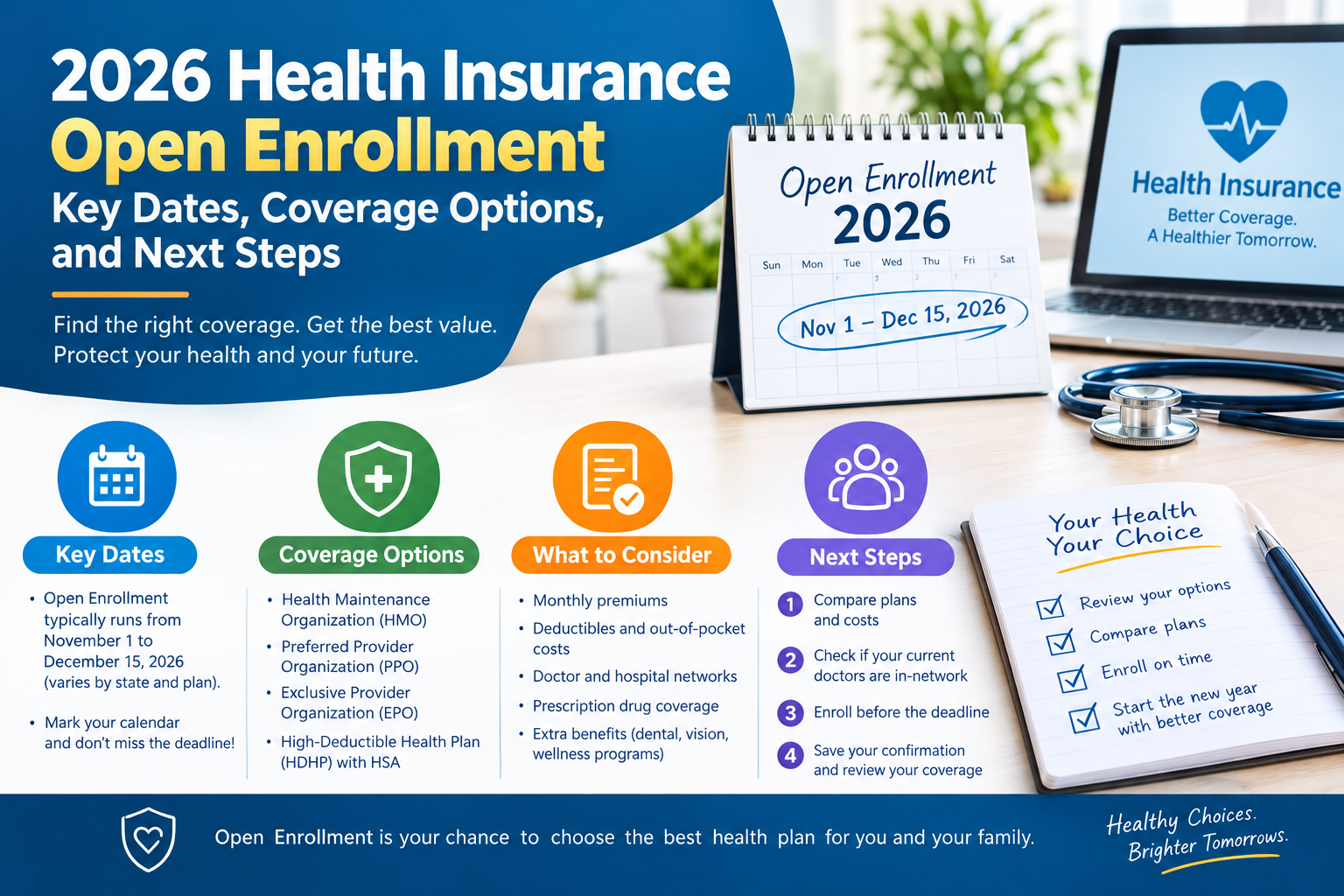
For most states that use the federal HealthCare.gov Marketplace, open enrollment for 2026 health coverage runs from November 1, 2025, through January 15, 2026. During this period, eligible consumers can enroll in a Marketplace plan, renew their current coverage, or change plans for the coming year. If you are asking when is open enrollment for health insurance 2026, these are the federal Marketplace dates to keep in mind. They apply to states using the federal platform, not necessarily every state.
The date you submit your application can affect when coverage begins. In general, selecting a plan and completing enrollment by December 15, 2025, allows coverage to start January 1, 2026. People who enroll after December 15 but by the January 15 deadline can generally expect coverage to begin February 1, 2026. These are typical federal Marketplace effective dates; payment of the first premium and other enrollment requirements may also affect whether a plan takes effect.
State-run Marketplaces may use different enrollment deadlines, offer additional time, or set state-specific coverage effective dates. Some states operate their own exchange even though their timelines are similar to HealthCare.gov, so do not assume the federal deadline applies where you live. Check your state exchange’s official website for its 2026 schedule, plan selection cutoffs, and start dates. If you are close to a deadline, confirm the details directly with the Marketplace rather than relying on older notices or general guidance. Reviewing the dates early can give you time to compare premiums, benefits, provider networks, and prescription coverage before choosing a plan. If you miss open enrollment, you may need to qualify for a Special Enrollment Period to sign up outside the annual window. Eligibility rules and qualifying events vary, so contact the exchange or a qualified enrollment assister promptly to learn what options are available. Confirming the current rules is especially important if your state has announced changes to its enrollment calendar or procedures.
Employer-sponsored health insurance follows a separate schedule from the federal and state Marketplace. If you receive coverage through your job, the Marketplace dates do not determine when you can make routine changes to your workplace plan. Each employer establishes its own annual enrollment window, so there is no single answer to “when is open enrollment for health insurance 2026” for all employees. The timing depends on your employer’s benefits calendar and plan year.
Many organizations hold annual enrollment in the fall, but dates and procedures vary. Your employer should provide the opening and closing dates, instructions for selecting coverage, and the date any new elections take effect. Check workplace emails, mailed notices, your benefits portal, or information shared during staff meetings. If the details are unclear, contact human resources or the benefits administrator rather than assuming the deadline matches the Marketplace calendar. Missing an employer’s deadline may mean you must wait until the next annual window to change coverage, unless you qualify for a special enrollment opportunity.
Confirm which plan year the enrollment period covers. Some employers’ new plan year begins January 1, while others use a different start date. This affects when new premiums and coverage terms apply, and it may help explain why your workplace deadline differs from public enrollment dates. Use the opportunity to compare available plans and assess the needs of everyone you intend to cover. Review employee and dependent premiums, deductibles, copayments, provider networks, and prescription coverage, as well as the amount your employer contributes toward each option. Dependent coverage can cost substantially more than employee-only coverage, so compare it with other available options where appropriate. Read the plan materials carefully, confirm that your preferred providers are included, and submit your choices before the stated cutoff. Keep confirmation of your enrollment for your records and check that payroll deductions reflect your selected plan once coverage begins.
Medicare has its own enrollment calendar, separate from the Affordable Care Act (ACA) Marketplace open enrollment period. Therefore, the answer to “when is open enrollment for health insurance 2026” depends on the type of coverage a person is choosing. People reviewing Medicare options should focus on Medicare’s specific annual and plan-change periods.
Medicare’s Annual Enrollment Period runs from October 15 through December 7, 2025. During this window, people with Medicare can generally switch from Original Medicare to a Medicare Advantage plan, change Medicare Advantage plans, return to Original Medicare, or join, drop, or change a Medicare Part D prescription drug plan. Choices made during this period generally take effect on January 1, 2026. Comparing premiums, provider networks, prescription formularies, and out-of-pocket costs can help beneficiaries assess whether a plan will meet their needs in the coming year.
The Medicare Advantage Open Enrollment Period is a different opportunity, available from January 1 through March 31, 2026, to people who are already enrolled in a Medicare Advantage plan. During this period, an enrollee can generally switch to another Medicare Advantage plan, with or without drug coverage, or leave Medicare Advantage and return to Original Medicare, with the option to join a Part D plan. It is not a general enrollment window for people with Original Medicare to make any change they choose, and it does not replace the fall Annual Enrollment Period.
Initial Enrollment Periods and Special Enrollment Periods follow separate eligibility rules. The Initial Enrollment Period is tied to an individual’s first eligibility for Medicare, typically around age 65, while certain life events or changes in other coverage may qualify someone for a Special Enrollment Period. The timing and available actions depend on the circumstances. People approaching Medicare eligibility or experiencing a coverage change should confirm their deadlines and options with Medicare or Social Security rather than assuming the annual dates apply to them.
During ACA Marketplace open enrollment, eligible individuals and families can apply for health insurance, renew existing coverage, or select a different plan for the coming year. This period is also an opportunity to compare premiums, deductibles, provider networks, prescription coverage, and other benefits. If you are asking when is open enrollment for health insurance 2026, check the dates for your state and the Marketplace you use, since enrollment schedules and procedures can differ.
People with an existing Marketplace plan may generally keep it, choose another plan, or review whether their current coverage will renew automatically. Comparing options matters because plan availability, costs, and covered services can change from year to year. You may also move between metal levels—Bronze, Silver, Gold, or Platinum—if another level better matches your expected medical needs and budget. A plan’s metal level reflects how costs are shared on average, not the quality of care.
Applicants can seek Marketplace coverage regardless of their health status or history of medical conditions. Insurers cannot deny a Marketplace plan or charge more because of a pre-existing condition. Financial help, however, is subject to eligibility rules. Premium tax credits may reduce monthly premiums, while cost-sharing reductions may lower deductibles and other out-of-pocket costs for eligible people who enroll in a qualifying Silver plan. Household size, income, access to other coverage, and tax-filing circumstances can affect assistance.
Use enrollment to report changes in household members, address, income, or access to employer coverage. Accurate, current information helps determine eligibility and may prevent unexpected tax-credit repayments or coverage problems. Medicaid and the Children’s Health Insurance Program (CHIP) are different from Marketplace open enrollment: applications are generally accepted year-round, and people may apply whenever they believe they qualify. Eligibility rules, application pathways, and program administration vary by state. A Marketplace application can also indicate whether household members may qualify for Medicaid or CHIP, but final determinations follow the applicable state process.
Missing the Marketplace open enrollment deadline can limit your options for getting comprehensive health coverage. In most cases, you must wait until the next annual enrollment period to select or change a Marketplace plan. If you are asking when is open enrollment for health insurance 2026, note that the annual window is separate from opportunities to enroll after certain life events. Without an exception, you may have to manage medical costs yourself or rely on other coverage until you can enroll, so check the dates and rules that apply in your state.
You may qualify for a Special Enrollment Period (SEP) after certain changes in your circumstances. Common qualifying events include losing qualifying health coverage, getting married, having or adopting a child, or moving to an area where different Marketplace plans are available. Eligibility is not automatic in every case: the event, your prior coverage, and the timing can affect whether you qualify. SEPs often have event-specific deadlines, and you may need to submit documents that verify what happened. Contact the Marketplace promptly after a qualifying event to confirm your deadline, coverage start date, and required proof.
Missing an employer plan’s enrollment deadline has different consequences from missing the Marketplace deadline. You may need to wait for your employer’s next open enrollment period unless you experience an event that permits a midyear enrollment change. Contact your human resources department or plan administrator to learn the applicable rules. Medicare enrollment periods also follow program-specific timelines; late enrollment can sometimes lead to delayed coverage or a premium penalty, depending on the circumstances. For help, contact Medicare or the Social Security Administration. Medicaid and the Children’s Health Insurance Program (CHIP) generally accept applications throughout the year, so you can apply even after open enrollment ends. Check your state’s Medicaid or CHIP agency to see whether you or your family qualify.
Begin by listing the care you expect to use during the 2026 plan year, including routine visits, specialist appointments, prescriptions, tests, and any planned procedures. Then compare plans using the same checklist: monthly premium; deductible; copayments and coinsurance; annual out-of-pocket maximum; provider network; prescription formulary; referral requirements; and coverage for your anticipated care. Knowing when is open enrollment for health insurance 2026 helps you plan time to review these details and make a decision before the applicable deadline.
Do not judge a plan by its premium alone. A lower monthly payment may come with a higher deductible, larger cost-sharing amounts, or a narrower network, increasing what you pay when you need care. A plan with a higher premium may reduce costs for frequent appointments or ongoing treatment. Estimate your total annual cost by adding twelve months of premiums to likely out-of-pocket spending for your expected care. Consider both a typical-use estimate and a higher-use scenario, while remembering that covered services and plan rules affect the calculation.
Confirm that your preferred doctors, clinics, and hospitals are in network for the specific 2026 plan you are considering. Check the plan’s current provider directory, and contact the insurer or provider if the listing is unclear. Review the 2026 prescription formulary to verify each medication’s coverage tier, restrictions, and pharmacy requirements; a drug covered last year may have different terms this year. Also check whether specialist visits require referrals and whether expected services need prior authorization. Compare the exact plan documents, not just the insurer or plan name, because networks, benefits, and cost-sharing can change from one year to the next. A written comparison of estimated annual costs and these coverage details can make trade-offs easier to see and help you select a plan that fits both your budget and care needs.
Before applying for or renewing health insurance for 2026, gather basic information for everyone in your household who needs coverage. This may include full legal names, dates of birth, home addresses, and Social Security numbers. If a household member does not have a Social Security number, prepare relevant immigration documents where applicable; eligibility rules vary by status. You may also need details about household relationships, tax filing plans, and who will claim dependents. Having these records available can make it easier to complete an application accurately and avoid delays while information is verified.
Estimate each household member’s expected income for 2026, including wages, self-employment earnings, unemployment benefits, and other income the application asks you to report. Also collect information about any employer-sponsored coverage available to you or family members, such as the cost of premiums and whether the offer meets affordability and minimum-value standards. Accurate household and income estimates are important because they help determine eligibility for Marketplace savings, including premium tax credits and cost-sharing reductions. If you use advance premium tax credits to lower monthly premiums, you generally must reconcile those payments on your federal tax return. Keep records and respond to requests for supporting documents.
Have your current insurance card or plan documents nearby, along with details about monthly premiums, deductibles, and out-of-pocket costs. Make a list of prescriptions, preferred pharmacies, doctors, specialists, and facilities you want to keep, then check whether they participate in any plan you are considering. Read Marketplace or insurer notices carefully, including information about changed benefits, premiums, provider networks, and renewal deadlines. If you expect to keep your current plan, do not assume that every detail will stay the same: confirm whether renewal is automatic, what plan you will be placed in, and whether financial assistance has changed. Update your application even when nothing seems different, because household, income, and coverage information can affect both eligibility and costs. Compare available options before accepting a renewal so your 2026 coverage still fits your health needs and budget.
Start by identifying which coverage program applies to you: an Affordable Care Act (ACA) Marketplace plan, employer-sponsored insurance, or Medicare. The enrollment window, eligibility rules, and available actions differ by program, so do not rely on a deadline that applies to another type of coverage. If you are unsure when is open enrollment for health insurance 2026, first establish which program you need to use.
Next, confirm the official enrollment deadline for your specific coverage. For ACA plans, check HealthCare.gov or your state Marketplace, since state-based exchanges may set different dates or provide additional enrollment periods. For workplace insurance, review your employer’s benefits notice or contact the human resources or benefits office. For Medicare, consult Medicare.gov or a State Health Insurance Assistance Program (SHIP) counselor. Verify dates directly with these sources, because state rules and program details can change.
Once you know the cutoff, compare the plans available to you. Review monthly premiums alongside deductibles, copayments, coinsurance, provider networks, prescription coverage, and estimated total costs. Check whether your doctors and medications are covered, and consider how much care you expect to use during the plan year. If you receive financial assistance, confirm how changes in income or household size could affect your eligibility and costs.
Then complete the application or submit any plan changes before the stated deadline. Allow time to resolve account issues, provide requested documents, and review your choices before final submission. Do not assume that saving an application, beginning enrollment, or making a phone call counts as completing the required action; follow the program’s instructions and obtain confirmation that your selection was received.
Finally, save the confirmation number, submitted application or plan-change record, selected plan details, and coverage effective date. Check later notices for premium payment instructions or additional steps needed to activate coverage. If the confirmation does not arrive, or any detail appears incorrect, contact the Marketplace, employer benefits office, or Medicare resource promptly. Keeping these records makes it easier to verify enrollment and address problems before coverage is needed.